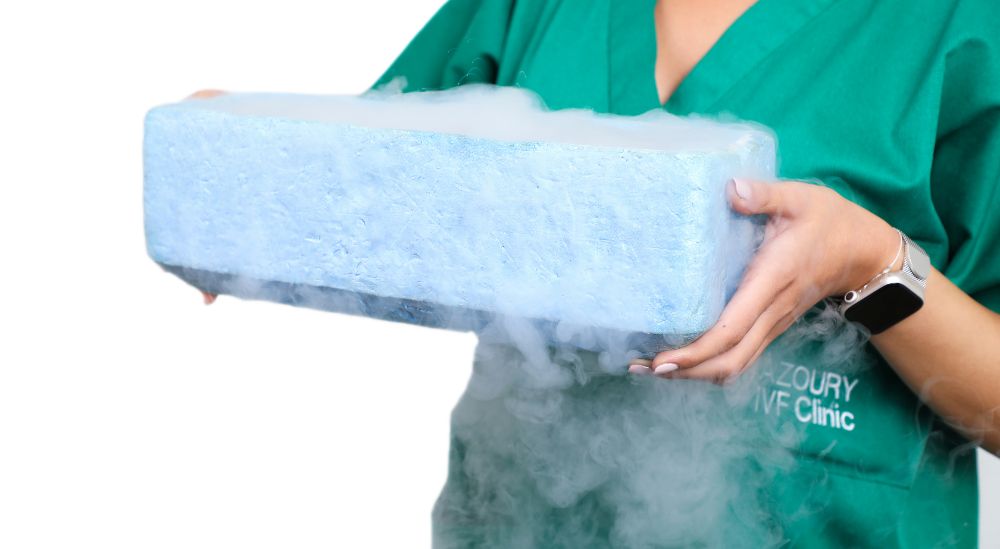


Azoury IVF lebanon clinic has an excellence award in egg freezing.

Is egg freezing a new trend?

September 17, 2024

egg freezing, fertility preservation, egg freezing in lebanon, egg freezing lebanon, egg donation in lebanon, ivf lebanon, azoury ivf clinic

Opening Hours

  • 07.30 - 15.30
  • 07.30 - 14.30
  • 07.30 - 14.30
  • 07.30 - 14.30
  • 07.30 - 15.30
  • 07.30 - 14.30
  • Closed

To get a free whatsapp consultation or book your appointment today!

Click Here

For more information or to get started on your IVF Journey today

Call Us! +961 5 453 607

Related FAQs

  • The goal of this step is to have a high number of eggs (more eggs = more embryos = more chances of having a baby). Each cycle, a woman generally ovulates only one egg. This egg can be of good or bad quality; it can get fertilized by the sperm or not; the embryo obtained can undergo normal early development or not; it can implant or not. Hence, when we undergo a burdensome IVF cycle, we stimulate the ovaries using hormonal injections in order to obtain the biggest number of eggs possible and have better chances in obtaining a good embryo that will lead to a pregnancy.

  • Definitely not! And this is a general misconception! Each day a different group of follicles starts growing in a woman’s ovaries. The recruitment of these follicles and their first phase of growth are independent from hormones. When these follicles reach a certain size, their growth becomes dependent on hormones. The biggest and strongest of these follicles starts “taking all the hormones” produced by the woman’s body and continues to grow alone while the other follicles do not have “enough hormones” and die. The injection of hormones used during ovarian stimulation saves these follicles from dying but does not lead to recruiting more oocytes from the ovaries.

  • Using ultrasound, the doctor can see the follicles and follow up on their growth. The follicles are not the eggs, they are the “bags” that contain the eggs and help them become competent. It is impossible to see the eggs by ultrasound. Some follicles are empty and that’s why there is very often a difference between the number of follicles seen by ultrasound and the number of oocytes retrieved during oocyte pick-up for IVF.

  • Thousands of clinical trials have been trying to answer this question. It is admitted that hormones that are injected during ovarian stimulation are not toxic and are unlikely to cause cancer. On the other hand it is strongly believed that hormones promote cancer in people that are suffering from it without knowing.

  • IVF is a multiple step procedure. The first step, ovarian stimulation, consists in daily hormonal injections for a period that varies between 8 and 12 days. Of course injections are burdensome, but some people require taking injections daily all their life so few days of injections are not a huge deal. The second step is oocyte pick up. It is performed under sedation and it is a painless procedure. The pain after the procedure is similar to regular period pain. The last step is embryo transfer, that takes less than a minute and that does not require any sedation as it is similar to any gynecological check up.

  • The first step of IVF, ovarian stimulation, requires generally between 8 to 12 days, egg pick up and fertilization using ICSI, one day. Embryos will be cultured between 3 to 5 days in the lab and then transferred. So, in general, the process requires 20 days starting day 2 of the period. It will require around 15 additional days if freeze all strategy is indicated. Freeze all strategy is when no fresh embryos are transferred. They are all frozen and transfer occurs in a subsequent cycle.

  • When a woman suffers from severe ovarian failure and her AMH level is very low, lower than 0.1, the only solution possible is IVF with egg donor. Vitamins, DHEA, stem cells and PRP were all proposed to be solutions in the past but none of them has proven to be efficient. In case the woman suffering from ovarian failure is very young we can attempt to do oocyte banking and IVF before resorting to egg donation. In case the ovarian failure is a result of advanced maternal age, egg donation is the most efficient and quickest solution possible.

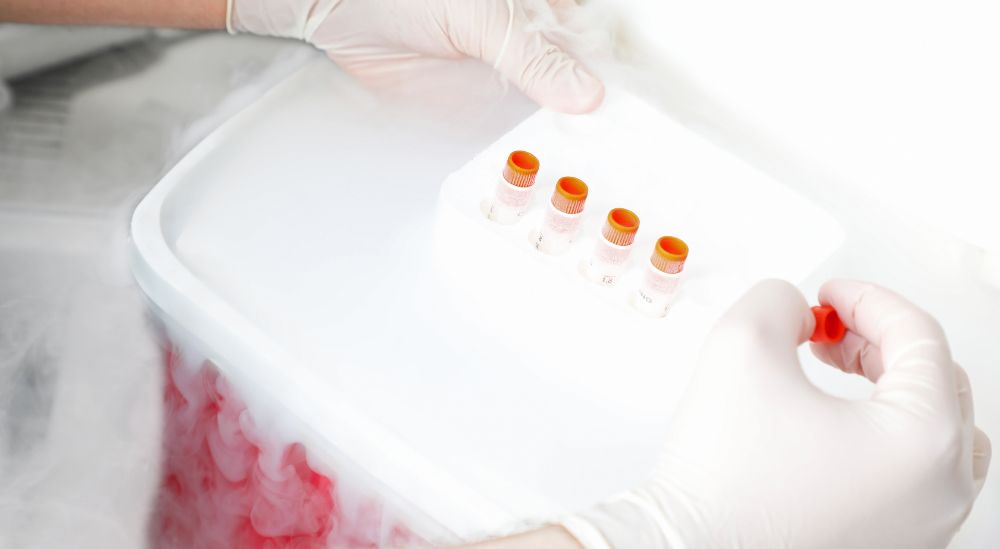
  • The duration of freezing does not affect embryo or egg quality. One day of freezing is equivalent to a hundred years. In the past a lot of embryos or eggs used to degenerate during the freezing or the thawing process. However, with the emergence of vitrification, egg and embryo survival rates have become higher than 90%. Few months ago, a baby was born from an embryo that was frozen 30 years ago.