
Is Egg Donation Safe? Understanding the Medical Risks for Egg Donors and How Modern IVF Protocols Have Changed the Picture
November 23, 2026Egg donation is an important part of assisted reproductive medicine, allowing women who cannot use their own eggs to have an opportunity to achieve pregnancy. However, behind every egg donation cycle is a healthy woman who undergoes hormonal stimulation and a medical procedure to retrieve her eggs.
Naturally, one of the most important questions potential egg donors ask is: Does donating my eggs put my health or future fertility at risk?
This question deserves an honest and scientifically accurate answer.
Egg donation involves ovarian stimulation and a minor surgical procedure. Like any medical intervention, it carries potential risks. However, reproductive medicine has evolved considerably, and modern stimulation protocols have significantly improved donor safety, particularly regarding ovarian hyperstimulation syndrome (OHSS).
With current individualized stimulation protocols, the use of GnRH antagonist protocols and an appropriate GnRH agonist trigger, severe OHSS can be reduced to an extremely low risk. In carefully managed donor cycles, it is now a largely preventable complication.
It is important to understand the difference between the potential risks associated with traditional stimulation approaches and the safety measures available today.
This article explains what an egg donor actually goes through, which complications may occur, how modern protocols reduce these risks, and what is known about the long-term health of women who donate eggs.
1. What Does an Egg Donor Go Through Medically?
Egg donation involves several steps, each designed to obtain mature eggs while minimizing risks to the donor.
The process generally includes:
1. Medical evaluation and screening
Before donation, the woman undergoes a comprehensive assessment, which may include:
- Medical and family history.
- Physical and gynecological examination.
- Ovarian reserve assessment.
- Infectious disease screening.
- Genetic carrier screening, according to the applicable program.
- Psychological or psychoeducational counselling.
This evaluation helps determine whether she is medically suitable for donation and whether any condition could increase the risks of stimulation or egg retrieval.
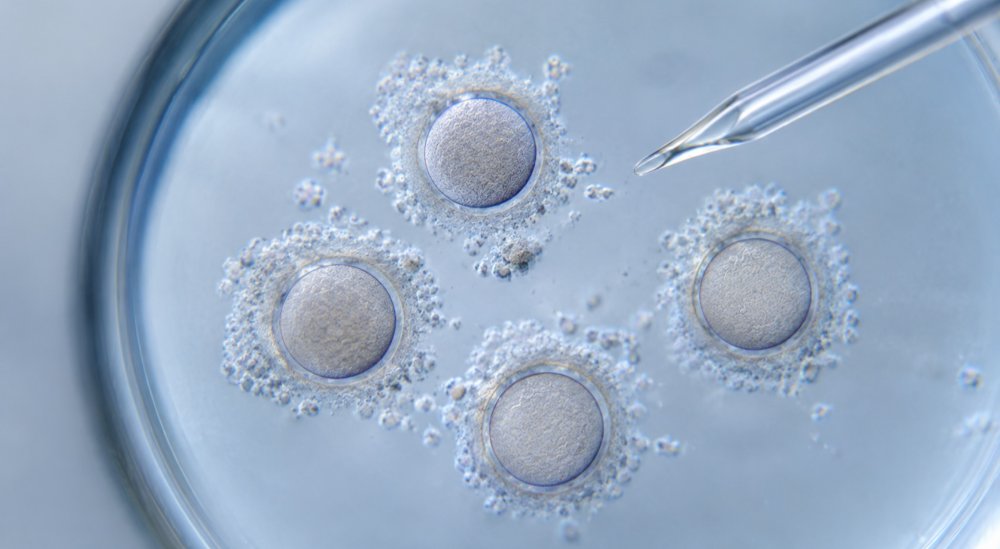
2. Ovarian stimulation
The donor receives hormonal injections, usually containing follicle-stimulating hormone (FSH), to encourage several ovarian follicles to develop simultaneously.
In a natural menstrual cycle, usually one follicle reaches maturity. During stimulation, several follicles are allowed to mature so that multiple eggs can be collected.
The donor is monitored through ultrasound examinations and, when indicated, hormonal blood tests.
3. Final egg maturation
When the follicles reach the appropriate stage of development, a medication is administered to trigger the final maturation of the eggs.
The choice of trigger medication is particularly important for donor safety because it influences the risk of OHSS.
4. Egg retrieval
Approximately 34–36 hours after the trigger, eggs are collected through a transvaginal ultrasound-guided procedure under sedation or anesthesia.
A fine needle is used to aspirate the follicular fluid and retrieve the eggs.
The donor generally returns home on the same day after a period of observation.
2. Ovarian Hyperstimulation Syndrome (OHSS): What About the Risk Today?
OHSS is traditionally considered one of the most important potential complications of ovarian stimulation.
It occurs when the ovaries respond excessively to stimulation medications, resulting in enlarged ovaries and increased vascular permeability, which may cause fluid to accumulate outside blood vessels.
Symptoms can include:
- Abdominal bloating and discomfort.
- Enlarged ovaries.
- Nausea and vomiting.
- Fluid accumulation in the abdomen.
- In severe cases, blood concentration, kidney dysfunction, and an increased risk of blood clots.
Historically, OHSS was a significant concern during IVF and egg donation, particularly when human chorionic gonadotropin (hCG) was used to trigger final egg maturation in women with a high ovarian response.
However, modern IVF protocols have fundamentally changed the way we prevent OHSS.
Why is OHSS risk now dramatically lower in egg donors?
Several advances have made ovarian stimulation considerably safer.
A. GnRH antagonist protocols
Modern donor cycles commonly use a GnRH antagonist protocol.
This approach allows the fertility specialist to control the hormonal cycle and use a safer trigger strategy, particularly in women who develop a large number of follicles.
B. GnRH agonist trigger instead of traditional hCG trigger
This is one of the most important developments in donor safety.
A GnRH agonist trigger stimulates the donor's own pituitary gland to release a natural surge of luteinizing hormone (LH), which induces final egg maturation.
Unlike the traditional hCG trigger, it produces a shorter hormonal stimulus and substantially reduces the risk of OHSS.
The absence of a subsequent pregnancy in an egg donor also eliminates pregnancy-related late-onset OHSS.
C. Individualized stimulation doses
The medication dose is adjusted according to the donor's age, AMH, antral follicle count, body characteristics, and expected ovarian response.
The aim is to obtain an appropriate number of mature eggs without overstimulating the ovaries.
D. Careful monitoring
Ultrasound monitoring, with hormonal assessment when appropriate, allows the specialist to identify an excessive ovarian response and adapt the treatment before egg retrieval.
So, can we say that OHSS is impossible today?
Medically, it would not be correct to describe the risk as absolutely zero.
However, with a properly selected antagonist protocol, an appropriate GnRH agonist trigger, individualized dosing, and adequate monitoring, the risk of severe OHSS becomes extremely low.
Mild ovarian enlargement and temporary bloating may still occur. These are not necessarily OHSS and should not be confused with moderate or severe disease.
The 2025 ESHRE ovarian stimulation guideline supports the use of antagonist protocols in predicted high responders and recommends a GnRH agonist trigger combined with an appropriate preventive strategy to minimize severe OHSS.
PubMed Central (PMC)+2
For egg donors, the absence of pregnancy following retrieval is another important safety advantage because it prevents pregnancy-driven late OHSS.
3. Is Egg Retrieval Dangerous?
Egg retrieval is a minimally invasive procedure performed under ultrasound guidance.
Although it is generally considered safe, it is not completely without risk.
The potential complications include:
A. Vaginal bleeding
A small amount of spotting or vaginal bleeding may occur following the procedure.
Significant internal bleeding is uncommon but can occasionally occur if a blood vessel is injured during needle insertion.
B. Pelvic infection
Infection following egg retrieval is rare. The risk may be higher in women with certain pelvic conditions, including significant endometriosis or previous pelvic infections.
C. Injury to surrounding structures
Because the retrieval needle passes through the vaginal wall and into the ovaries, injury to surrounding organs or blood vessels is possible, although extremely uncommon when the procedure is performed by an experienced specialist.
D. Ovarian torsion
During stimulation, the ovaries become temporarily enlarged. This may increase the risk of ovarian torsion, a condition in which an enlarged ovary twists around its supporting structures.
It is uncommon but requires urgent medical assessment if sudden, severe pelvic pain occurs.
E. Anesthesia-related complications
Egg retrieval is generally performed under short-duration sedation or anesthesia.
Potential complications include nausea, allergic reactions, or respiratory and cardiovascular complications, although serious events are uncommon in appropriately assessed healthy donors.
According to the ASRM committee opinion on repetitive oocyte donation, acute complications such as pelvic infection, internal bleeding and ovarian torsion are uncommon, with reported rates below 0.5% in the cited literature.
4. What Side Effects Can an Egg Donor Expect After Stimulation?
Most donors experience mild and temporary symptoms rather than serious complications.
Common symptoms include:
- Abdominal bloating.
- Mild pelvic discomfort.
- A sensation of heaviness in the lower abdomen.
- Breast tenderness.
- Fatigue.
- Mild nausea.
- Temporary changes in mood.
These symptoms are related to ovarian enlargement and hormonal fluctuations during stimulation.
After egg retrieval, mild cramping and spotting may also occur.
Most women can resume their usual daily activities within a short period, although the exact recovery time varies.
It is generally advisable to avoid strenuous physical exercise, heavy lifting and sexual intercourse during the period of ovarian enlargement and for the duration recommended by the treating specialist.
Donors should receive clear instructions about symptoms requiring medical attention, particularly severe abdominal pain, increasing abdominal swelling, persistent vomiting, shortness of breath, reduced urine output, fever or heavy bleeding.
5. Does Egg Donation Affect a Woman's Future Fertility?
This is probably the most important long-term concern for potential donors.
Women are born with a finite ovarian reserve, and it is understandable to wonder whether retrieving several eggs during donation will reduce their ability to have children later.
As explained in our article on IVF and ovarian reserve, ovarian stimulation recruits follicles that have already started developing during that menstrual cycle.
Without stimulation, most of these follicles would naturally undergo atresia.
The medication allows several follicles to mature rather than allowing only one to become dominant.
There is no convincing evidence that properly performed ovarian stimulation for egg donation accelerates the natural depletion of ovarian reserve or causes premature menopause.
Egg retrieval removes the mature eggs collected during that cycle, but it does not appear to exhaust the remaining dormant follicle population.
This distinction is particularly important when counselling young women considering donation.
However, it is also important to explain that the long-term evidence on repeated egg donation is not unlimited. The absence of demonstrated harm should not be interpreted as proof that every possible long-term effect has been excluded.
A donor's personal reproductive health, medical history and future fertility plans should always be considered.
6. Does Egg Donation Increase the Risk of Cancer?
Another concern sometimes raised by potential donors is whether exposure to fertility medications increases the risk of ovarian, breast or endometrial cancer.
Available evidence has not established a causal relationship between standard ovarian stimulation for fertility treatment and an increased risk of these cancers.
However, research specifically following egg donors over several decades is limited.
It is therefore important not to make absolute guarantees about lifetime cancer risk.
A donor with a significant personal or family history of certain cancers, particularly hereditary breast and ovarian cancer syndromes, should undergo an appropriate medical and genetic assessment before being accepted into a donation program.
The decision to donate should always take into account the woman's individual risk profile.
7. Are There Psychological or Emotional Risks Associated With Egg Donation?
The medical procedure is only one aspect of egg donation.
Donation may also involve emotional and psychological considerations.
Some women may experience:
- Anxiety before the procedure.
- Concerns about the recipient family.
- Questions about genetic connections.
- Emotional reactions to the possibility of having genetically related offspring.
- Concerns about anonymity, privacy or future contact.
These concerns do not mean that egg donation is psychologically harmful. However, they deserve appropriate attention.
Psychoeducational counselling allows donors to understand the implications of donation, make an informed decision, and consider the possible emotional consequences.
The donor should never feel pressured to participate, and consent should remain voluntary throughout the process.
8. How Many Times Can a Woman Donate Eggs?
Repeated egg donation requires particular attention.
Each additional stimulation cycle involves another course of medication and another retrieval procedure.
Although available evidence is generally reassuring, the cumulative risks of repeated donations are not completely defined.
For this reason, professional societies recommend limiting the number of donation cycles.
The American Society for Reproductive Medicine has traditionally recommended limiting an individual donor to six stimulation cycles.
This recommendation is intended to reduce cumulative exposure and the possibility of rare complications, while also limiting the number of offspring originating from the same donor.
The decision should take into account:
- The donor's previous response.
- The number of eggs retrieved.
- Any complications during previous cycles.
- Recovery between cycles.
- The donor's current health and reproductive plans.
A previous uncomplicated donation does not automatically mean that another cycle is appropriate.
9. How Does Azoury IVF Clinic Prioritize Egg Donor Safety in Lebanon?
At Azoury IVF Clinic, egg donation is approached as a medical process in which the donor's health and safety must remain a priority.
The objective is not simply to obtain the highest possible number of eggs, but to achieve an appropriate ovarian response while minimizing medical risks.
Our approach includes:
1. Careful donor selection
Candidates undergo medical assessment and appropriate screening before acceptance into the donation program.
2. Individualized ovarian stimulation
Medication doses and stimulation protocols are selected according to the donor's ovarian reserve and expected response.
3. Modern OHSS prevention strategies
The use of appropriate antagonist protocols and GnRH agonist triggers, when indicated, substantially reduces the risk of severe OHSS.
4. Close monitoring
Follicular development and ovarian response are monitored throughout stimulation, allowing adjustments when necessary.
5. Experienced egg retrieval team
The retrieval procedure is performed under ultrasound guidance, with appropriate anesthesia and post-procedure observation.
6. Follow-up and donor education
Donors receive instructions regarding recovery, warning symptoms and access to medical assessment when needed.
Egg donation in Lebanon should be undertaken through a structured medical program that respects donor autonomy, informed consent, medical screening and appropriate follow-up.
A healthy donor should never be treated simply as a source of eggs. She is a patient undergoing a medical procedure and deserves the same level of care, respect and attention as any other patient receiving fertility treatment.
Frequently Asked Questions
1. Is egg donation dangerous for the donor?
Egg donation is generally considered a safe medical procedure when performed following appropriate screening, individualized stimulation and careful monitoring. Temporary symptoms are relatively common, while serious complications are uncommon.
2. Can an egg donor develop ovarian hyperstimulation syndrome?
With modern antagonist protocols and an appropriate GnRH agonist trigger, the risk of severe OHSS is extremely low. Mild ovarian enlargement and bloating may still occur. No stimulation protocol can guarantee an absolute zero risk.
3. Does donating eggs reduce future fertility?
There is no convincing evidence that egg donation accelerates the natural depletion of ovarian reserve or causes premature menopause. The eggs retrieved generally come from follicles that would otherwise undergo natural atresia.
4. Can egg donation cause early menopause?
There is no convincing evidence that ovarian stimulation for egg donation causes early menopause. The natural decline in ovarian reserve is primarily related to age and individual biological factors.
5. Can egg donation increase the risk of ovarian or breast cancer?
Current evidence has not established a causal relationship between standard fertility stimulation and increased ovarian or breast cancer risk. However, long-term studies specifically involving egg donors remain limited.
6. How long does it take to recover after egg donation?
Most donors recover within a few days after egg retrieval. Mild bloating, cramping and spotting may occur temporarily. Recovery varies, and the treating specialist should provide individualized instructions.
Conclusion
Egg donation is a valuable medical procedure that allows many women and couples to achieve their dream of parenthood. However, the health and safety of the egg donor must always come first.
Although ovarian stimulation and egg retrieval carry potential medical risks, modern reproductive medicine has considerably improved the safety of the process.
In particular, individualized antagonist stimulation protocols, GnRH agonist triggers, careful monitoring and appropriate preventive measures have made severe ovarian hyperstimulation syndrome an extremely rare outcome in properly managed donor cycles.
There is also no convincing evidence that egg donation depletes a woman's future ovarian reserve or causes premature menopause.
Nevertheless, responsible egg donation requires careful donor selection, informed consent, medical supervision and appropriate follow-up. No medical procedure should be described as completely risk-free.
At Azoury IVF Clinic, we believe that helping another woman become a mother should never come at the expense of the donor's health. Every donor deserves individualized medical care, transparency and respect throughout the entire process.
If you are considering becoming an egg donor in Lebanon, our team can explain the procedure, assess your medical suitability and answer your questions so that you can make a fully informed decision.
References
1. American Society for Reproductive Medicine (ASRM). Repetitive Oocyte Donation: A Committee Opinion. Fertility and Sterility. 2020.
ASRM
2. European Society of Human Reproduction and Embryology (ESHRE). Guideline on Ovarian Stimulation for IVF/ICSI: Update 2025. Human Reproduction. 2026.
PubMed Central (PMC)+2
3. American Society for Reproductive Medicine (ASRM). Prevention of Moderate and Severe Ovarian Hyperstimulation Syndrome: A Guideline. 2023.
practice guidance
4. American Society for Reproductive Medicine (ASRM). Guidance Regarding Gamete and Embryo Donation. 2024.
ASRM
5. European Society of Human Reproduction and Embryology (ESHRE). Ovarian Stimulation Guideline: Patient Information.
ESHRE