
Uterine Fibroids and Fibroid Surgery: When Is Surgery Necessary?
October 05, 2026Uterine fibroids are among the most common conditions affecting women during their reproductive years. They are benign growths that develop from the muscle of the uterus and can vary greatly in size, number and location.
For some women, fibroids cause no symptoms and require no treatment. For others, they can lead to heavy menstrual bleeding, pelvic pressure or pain, anemia, problems with the uterine cavity, or difficulties related to fertility.
One of the most common questions we hear is:
“If I have a fibroid, do I need surgery?”
The answer is not always yes.
The decision to remove a fibroid depends on several factors, including its location, size, number, symptoms, effect on the uterine cavity, age, reproductive plans and fertility history. In women trying to conceive, the relationship between the fibroid and the uterine cavity is particularly important.
At Azoury IVF Clinic, fibroid management is approached from both a gynecological and reproductive perspective, because preserving future fertility is an essential part of the decision-making process.
What are uterine fibroids?
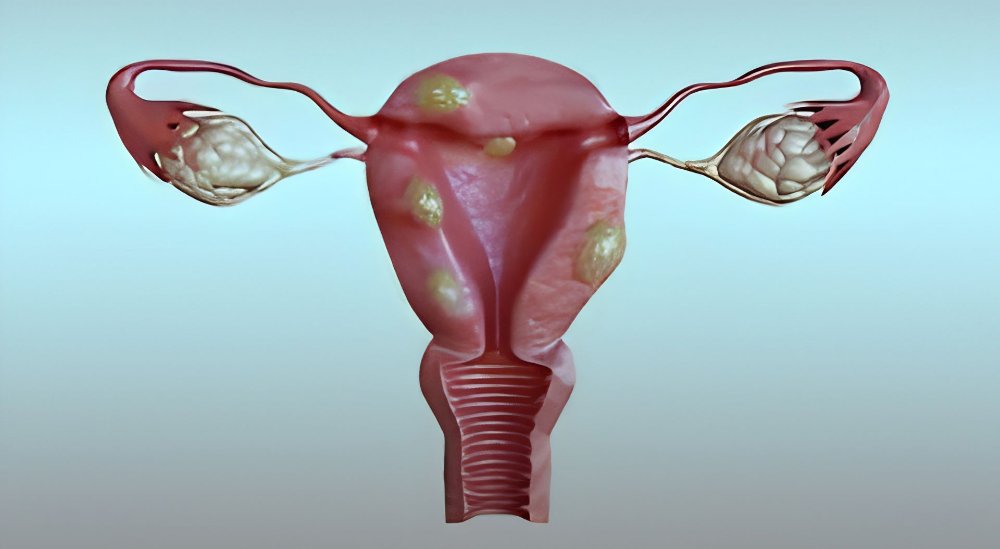
Uterine fibroids, also called leiomyomas or myomas, are benign tumors arising from the muscular layer of the uterus.
They can develop in different parts of the uterus and are commonly classified according to their relationship with the uterine wall and cavity.
The main types include:
- Submucosal fibroids: located close to or projecting into the uterine cavity.
- Intramural fibroids: located within the muscular wall of the uterus.
- Subserosal fibroids: located toward the outer surface of the uterus.
A woman may have a single fibroid or multiple fibroids, and their characteristics can change over time.
Importantly, not every fibroid needs to be removed.
What symptoms can fibroids cause?
Some women have no symptoms at all. Others may experience:
- Heavy or prolonged menstrual bleeding
- Painful periods
- Pelvic pressure or discomfort
- Abdominal enlargement
- Frequent urination when a fibroid presses on the bladder
- Constipation or pressure on the bowel
- Pain during intercourse
- Anemia resulting from heavy bleeding
- Difficulties related to fertility in selected cases
The symptoms are not determined by size alone. A relatively small fibroid that distorts the uterine cavity may be more relevant to fertility than a much larger fibroid located away from the cavity.
Can fibroids affect fertility?
This is an important question, particularly for women considering pregnancy or IVF.
The answer depends largely on where the fibroid is located and whether it changes the shape of the uterine cavity.
Fibroids that protrude into or significantly distort the uterine cavity are more clearly associated with reproductive problems. Evidence reviewed by the American Society for Reproductive Medicine supports considering myomectomy for cavity-distorting fibroids in appropriate patients. Hysteroscopic removal of submucosal fibroids can improve clinical pregnancy rates.
The situation is less straightforward with fibroids that do not affect the cavity.
For example, simply finding an intramural or subserosal fibroid does not automatically mean that surgery will improve fertility. Current evidence does not support routinely removing non-cavity-distorting fibroids solely to improve fertility in every infertile woman.
This is why the decision should be individualized rather than based on a fibroid's size alone.
When should a fibroid be removed?
Fibroid surgery may be considered when one or more of the following are present:
- Significant or persistent symptoms
- Heavy menstrual bleeding or anemia
- Pelvic pressure or pain
- A fibroid that distorts the uterine cavity
- A submucosal fibroid affecting the endometrial cavity
- A large or strategically located fibroid affecting reproductive anatomy
- Repeated fertility treatment failure in a clinical situation where the fibroid may be contributing
- A large fibroid that interferes with access to the ovaries during IVF
- Rapidly changing symptoms or other clinical concerns requiring further evaluation
However, the presence of a fibroid alone is not an automatic indication for surgery.
A fertility specialist and gynecologic surgeon should assess the complete picture before recommending an operation.
What is a myomectomy?
Myomectomy is the surgical removal of fibroids while preserving the uterus.
This is different from a hysterectomy, in which the uterus is removed.
For women who wish to preserve their fertility, myomectomy may be an important treatment option when surgery is indicated.
The surgical approach depends on the fibroid's location, size, number and relationship to the uterine cavity.
Hysteroscopic myomectomy
A hysteroscopic procedure is performed through the vagina and cervix, without an abdominal incision.
It is mainly used for fibroids that project into the uterine cavity.
This approach can be particularly relevant for women with submucosal fibroids who are trying to conceive. Current evidence supports hysteroscopic myomectomy for appropriate cavity-distorting fibroids.
Laparoscopic myomectomy
Laparoscopic surgery uses small abdominal incisions and a camera to remove selected fibroids.
It may be appropriate for certain intramural or subserosal fibroids, depending on their size, number and location.
Open abdominal myomectomy
For very large, numerous or complex fibroids, an abdominal approach may sometimes be the most appropriate surgical option.
The choice of technique should be based on the individual patient rather than on the desire to use one surgical approach in every case.
Fibroid surgery and fertility: what should women know?
When fertility is important, fibroid surgery requires particular care.
The goal is not simply to remove a fibroid. The surgeon must also consider the uterus as a future pregnancy environment.
This means evaluating:
- The location and depth of the fibroid
- The number of fibroids
- Whether the uterine cavity is distorted
- The patient's age
- Ovarian reserve and fertility history
- Previous surgeries
- The patient's plans for pregnancy or IVF
- The safest surgical approach
- The healing period required before attempting pregnancy
There is no single rule such as “fibroids larger than a certain number of centimeters must be removed.” The clinical context matters.
Fibroids and IVF
Women undergoing IVF may sometimes be found to have fibroids during their fertility evaluation.
This does not necessarily mean that IVF must be postponed or that surgery is automatically required.
The important question is whether the fibroid is likely to interfere with reproductive outcomes and whether removing it would provide a meaningful benefit that outweighs the risks and delay associated with surgery.
This is particularly important because surgery itself can have consequences, including scar formation and a recovery period.
For cavity-distorting fibroids, surgery may be considered to optimize reproductive outcomes. For non-cavity-distorting fibroids, the evidence is considerably less definitive, and routine surgery is generally not recommended solely because a fibroid is present.
Experience matters in fibroid surgery
Fibroid surgery is not simply about removing a mass. It requires an understanding of the anatomy of the uterus, reproductive goals and the importance of preserving healthy uterine tissue whenever possible.
At Azoury IVF Clinic, this experience is part of a long surgical tradition.
Dr. Joseph Azoury has more than 40 years of experience in obstetrics and gynecology and reproductive medicine, and has performed approximately 10,000 fibroid surgeries over the course of his career.
Today, he is joined at the clinic by his son, Dr. Joan Azoury, an American Board-Certified Obstetrician and Gynecologist with strong expertise in gynecologic surgery.
The combination of extensive surgical experience and a modern reproductive medicine perspective allows the team to look at fibroid surgery from an important question:
What is the safest and most appropriate treatment for this particular woman, while keeping her reproductive future in mind?
Should every woman with a fibroid have surgery?
No.
This is perhaps the most important message.
A fibroid can be large and cause no problems. Another can be relatively small but significantly distort the uterine cavity.
The decision should therefore be based on the individual characteristics of the fibroid and the woman, not on size alone.
A proper evaluation may include pelvic ultrasound, assessment of the uterine cavity and, when indicated, additional imaging or hysteroscopic evaluation.
For women experiencing infertility, the fibroid should also be considered in the context of the entire fertility assessment.
Frequently Asked Questions
1. Do all uterine fibroids require surgery?
No. Many fibroids cause no symptoms and do not require treatment. Surgery is considered according to symptoms, location, size, cavity distortion, reproductive plans and other individual factors.
2. Can fibroids cause infertility?
Some fibroids, particularly those that distort the uterine cavity, can affect reproductive outcomes. However, not every fibroid causes infertility, and the effect of intramural and subserosal fibroids on fertility is less clear.
3. Can I have IVF if I have fibroids?
Yes, in many cases. Having a fibroid does not automatically prevent IVF. The decision to treat the fibroid before IVF depends on its location, size, effect on the uterine cavity and the overall fertility situation.
4. What is the difference between myomectomy and hysterectomy?
A myomectomy removes the fibroid while preserving the uterus. A hysterectomy removes the uterus. For women who wish to become pregnant, myomectomy may be considered when surgery is indicated.
5. Can fibroids come back after surgery?
Yes. Myomectomy removes existing fibroids but does not eliminate the possibility of developing new fibroids in the future.
6. How do I know if my fibroid needs to be removed?
This requires an individualized gynecological assessment. The most important factors include the fibroid's location, size, number, symptoms and relationship to the uterine cavity, together with your reproductive plans.
Conclusion
Fibroids are common, but fibroid treatment should never be one-size-fits-all.
For women who are not trying to conceive, treatment may be guided primarily by symptoms. For women planning pregnancy or IVF, the effect of the fibroid on the uterine cavity and reproductive anatomy becomes particularly important.
When surgery is indicated, myomectomy can provide a way to remove fibroids while preserving the uterus.
At Azoury IVF Clinic, the decision is made by combining gynecological surgical expertise with a clear understanding of fertility and reproductive goals. With Dr. Joseph Azoury's more than four decades of experience and approximately 10,000 fibroid surgeries, alongside Dr. Joan Azoury's American Board-certified training and surgical expertise, patients benefit from generations of experience combined with contemporary reproductive medicine.
If you have been diagnosed with a fibroid and are wondering whether you need surgery, the most important first step is not to assume that you do.
It is to understand your specific fibroid and how, or whether, it affects your health and fertility.
References
- American Society for Reproductive Medicine. Removal of myomas in asymptomatic patients to improve fertility and/or reduce miscarriage rate: a guideline. Fertility and Sterility. 2017;108:416–425.
- American Society for Reproductive Medicine. Recurrent pregnancy loss: a committee opinion. 2026.
- European Society of Human Reproduction and Embryology. Guideline on Unexplained Infertility. 2023.